Coat pattern made to your measurements
A coat is built on a special system: a modified armhole and back balance so it can be worn over clothes. The engine accounts for this automatically — enter your measurements and get a coat base that fits from the first fitting.
How this pattern is built
- Coat system: modified armhole and back balance
- Ease allowance — for outerwear
- Sleeve and collar base to your measurements
- Seam balance is verified numerically on every build
From measurements to a finished pattern — three steps
1. Take your measurements
Bust, waist, hips and the needed lengths. The interface shows how to measure each one correctly — even a beginner can do it.
2. Choose a model
Dress, skirt, trousers, jacket or corset. All calculations — darts, allowances, fit — are done automatically by the engine using the Müller method.
3. Download and print
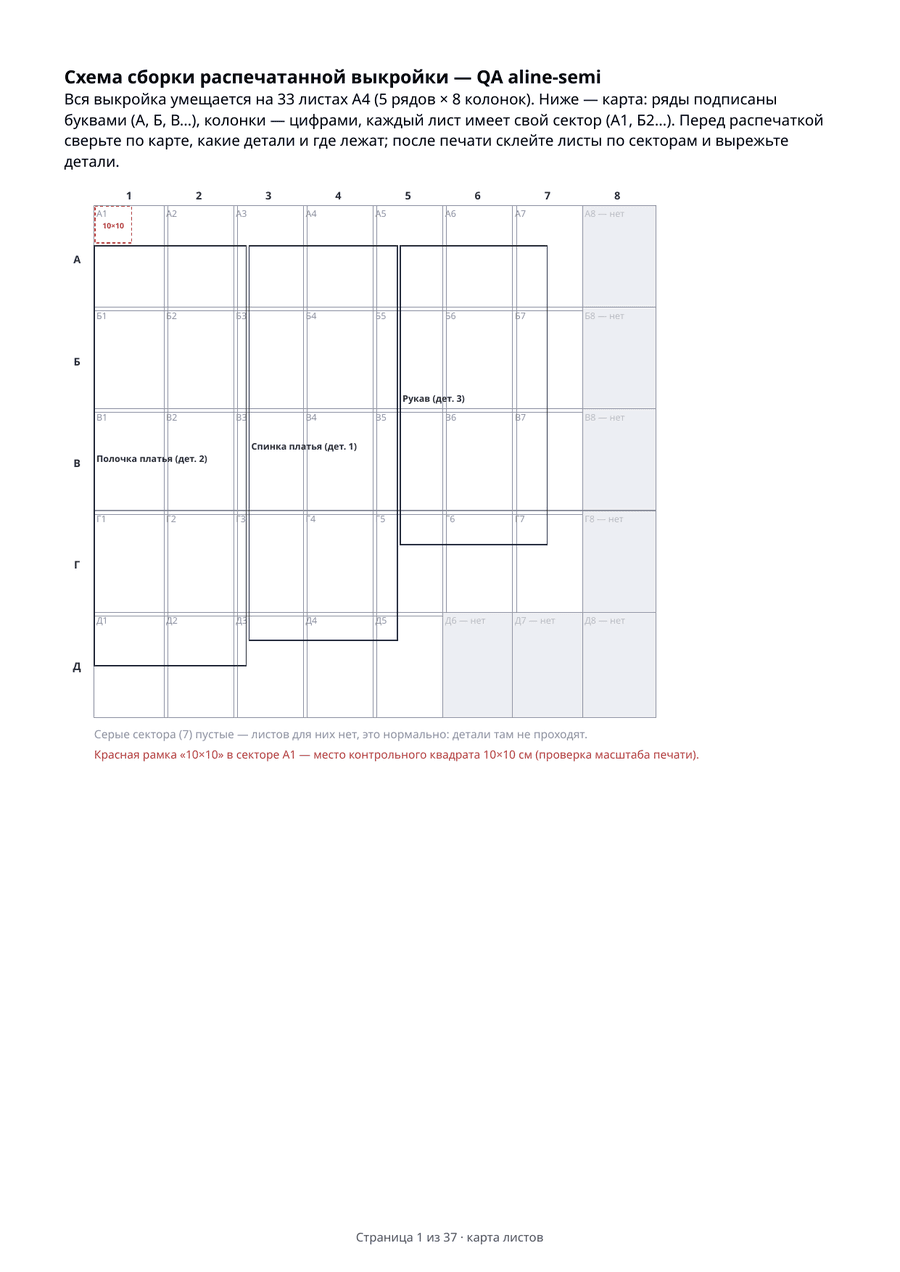
PDF on A4 sheets: print at 100% scale, glue along the marks, check the 10×10 cm control square — and you can cut.
What you get
- PDF for A4 printing — with a sheet map and gluing marks
- A 10×10 cm control square — check the scale with a ruler before cutting
- Seam allowances already included — can be disabled if you wish
- Seam balance is verified numerically on every build
- The construction is computed by an engineering engine using classic cutting-school formulas, not a neural network
Frequent questions about made-to-measure patterns
Is it free?
The demo mode is completely free and needs no registration: you can build a pattern to a standard size and assess the engine's quality. The full constructor with individual measurements is available in the account — a free trial period is currently active.
What format do I get the pattern in?
A ready PDF for printing on a regular A4 printer. Print at 100% scale, glue the sheets along the marks and check the 10×10 cm control square with a ruler.
Which measurements do I need?
The standard set: bust, waist, hips, garment and sleeve lengths, back width and others — the interface prompts each measurement and how to take it correctly.
Is it suitable for a beginner?
Yes. You don't need to know pattern drafting: you enter measurements and choose a model, and all calculations are done automatically. Technical prep is included with the pattern.